What on Earth is Fracking and Why Should We Care?

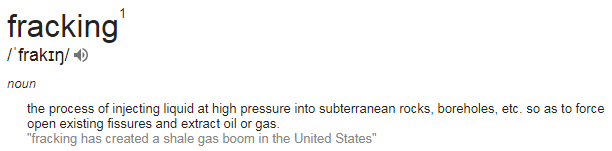
‘Fracking’ is another term for Hydraulic Fracturing, which is the process of drilling down into the earth and directing a high-pressure water mixture at the rock to allow the gas inside to be released.

The rock is actually fractured apart by the high pressure mixture of water, sand and chemicals, hence the term ‘fracking’, and these fractures can create new pathways (or extend existing ones) to allow escape of the gas contained.

Drilling companies have identified that certain areas of the UK have potential reserves of trillions of cubic square feet of shale gas, particularly in Northern England, leading to more than 100 licences being awarded by the UK government to allow companies to explore this potential.

So what’s the problem?

Despite fracking being accredited for the revolution of the energy industry in the US, the move in the UK has prompted many environmental concerns.

Some politicians have branded the gas recovered from shale rock as a ‘dirty fossil fuel’, and environmentalists are quite rightly troubled by the potential for carcinogenic chemicals to escape during the drilling process, contaminating groundwater and wildlife around the fracking site.

There is also the mindset that concentrating on investments in the fracking industry is distracting the government from exploring renewable and greener energy supplies, and becoming reliant again on environmentally-unfriendly fossil fuels in the future.

Friends of the Earth energy campaigner Tony Bosworth has wrapped up these concerns in a nutshell:

“We need a 21st Century energy revolution based on efficiency and renewables, not more fossil fuels that will add to climate change.”

Read more about UK fracking here:
https://www.bbc.com/news/uk-14432401

Could fully autonomous cars hit UK roads this year?

The UK government has announced plans to allow fully driver-less vehicles on Britain’s roads as soon as the end of this year.  Originally planned for 2021, new processes including rigorous safety testing and risk assessments mean that the introduction of said vehicles could be much sooner than anticipated if the new processes are confirmed.

Currently the law states that all ’driverless’ vehicles undergoing tests on public roads MUST be insured and overseen by an actual driver, either inside the vehicle or with a remote safety operator, who must be ready to take over control of the vehicle at any time.

New rules could potentially mean the removal of steering wheels and indeed, the driver, allowing for a fully autonomous vehicle.

Jesse Norman, Future of Mobility Minister said: “The government is supporting the safe, transparent trialling of this pioneering technology, which could transform the way we travel.”

Read a more in-depth article on this subject here: https://www.energylivenews.com/2019/02/06/could-fully-driverless-cars-hit-uk-roads-by-end-of-2019/

NPower Confirm 900 Job Cuts

Yesterday, the big six energy supplier confirmed that approximately 900 job cuts are imminent due to “extremely tough UK retail energy market conditions”.


Yesterday, the big six energy supplier confirmed that approximately 900 job cuts are imminent due to “extremely tough UK retail energy market conditions”.

NPower, which has a 6,300 strong workforce, have announced their plans to introduce a new operating cost reduction programme, blaming the price cap and fixed price tariff competition.

The big six supplier has stated that annually, around 900 people leave the company of their own free will, so the true number of redundancies is likely to be “considerably lower”, but have guaranteed that affected employees and the unions will be fully consulted over the new proposals.

NPower have promised that forced redundancies will be “minimised as much as possible”, and will be consulting with affected parties beginning in early February of this year.

Energy Saving Hack #2

Stop charging your phone so much! No, really, stop it.

Okay, the majority of us are guilty of this. We leave our phones plugged into the charger overnight so that we can wake up to a full battery in the morning and we’re ready to rock ‘n’ roll. But depending on your battery condition, that phone was charged waaaaaaay before you woke up. Hours before in fact.

Unplugging your phone when fully charged can save energy – and your battery

It turns out that charging your phone to 100% over and over again (before it’s even run out of charge) actually sucks the life out of your battery over time. So stop over-charging it! Save energy and your battery life by unplugging your phone once it’s charged, and let the battery run right down before charging again. Simple!

Energy Saving Hack #1

Air dry dishes instead of using your dishwasher’s drying cycle…just open the door after the rinse cycle and let Mother Nature do the rest!

…And when Mr. and Mrs. Smith arrived home later that evening, all of their dishes were dry!

If you run your dishes in the evening, you can wake up to dry dishes without a single kilowatt being used. Doing this can cut dishwasher energy use by 15-50%!

Mortgage Lending Could be Affected by the Energy Efficiency of a Property

In the past, mortgage companies have used relatively broad estimates in order to calculate a household’s energy usage. Lenders are now seeking to replace this with a much more in-depth analysis meaning that they can more accurately calculate a customer’s mortgage repayments (i.e. a low-energy home has lower energy bills, suggesting that these homeowners can afford a higher monthly repayment and therefore have more borrowing capacity).


Beautiful energy efficient home by Dept of Energy Solar Decathlon via Flikr

The aim is to encourage UK home energy efficiency, and what better way than to offer a financial benefit? The LENDERS scheme is a project tackling this idea in the hope of increasing buyers’ demand for more energy-efficient properties, or investment in less energy efficient properties to be upgraded. Companies involved in the scheme include Nationwide, the Energy Saving Trust, BRE and many others in the industry, and the scheme is due to end early this year.